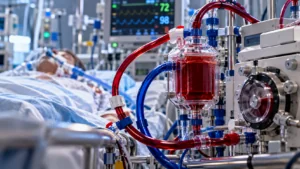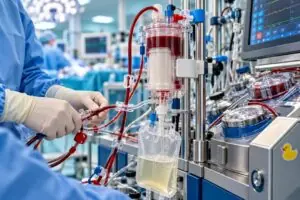
Cardiopulmonary bypass (CPB) is a fundamental component of modern cardiac surgery, enabling surgeons to temporarily replace the heart and lungs with a heart-lung machine during procedures such as coronary artery bypass grafting (CABG). Despite decades of clinical experience with CPB, certain technical aspects remain insufficiently standardized. One such factor is the optimal speed at which the pump flow should be increased when initiating bypass. The study titled “A Comparative Study of the Effect of Slow and Rapid Initiation of Cardiopulmonary Pump on Tissue Oxygenation Index and Ischemic Complications” investigates whether the speed of CPB initiation affects cerebral oxygenation and postoperative neurological outcomes.
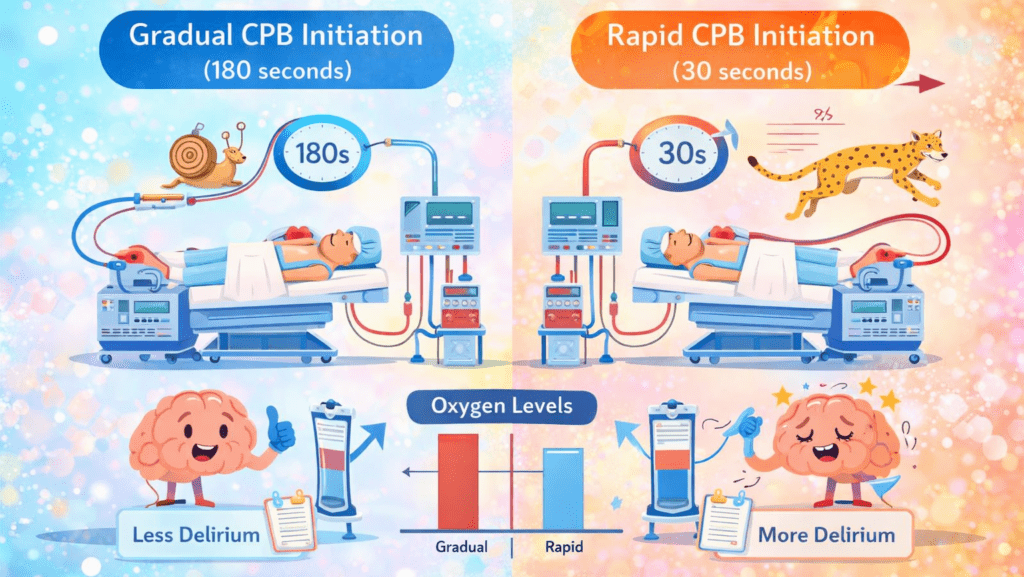
The investigators conducted a randomized, monocentric, prospective, double-blind trial involving 60 adult patients undergoing elective CABG surgery. Participants were divided equally into two groups based on CPB initiation speed. The rapid initiation group reached full target flow in 30 seconds, reflecting common conventional practice in many operating rooms. The slow initiation group reached full flow over 180 seconds, allowing for a more gradual hemodilution and circulatory adjustment.
The primary objective of the study was to determine whether the rate of CPB initiation influences cerebral tissue oxygenation, measured through near-infrared spectroscopy (NIRS) using the Tissue Oxygenation Index (TOI). Secondary outcomes included arterial oxygen pressure (PaO₂), hematocrit (HCT) variations, and the incidence of postoperative delirium measured using the Confusion Assessment Method for the ICU (CAM-ICU-7).
Before surgery, all patients underwent standardized anesthesia and monitoring procedures. Hemodynamic variables were carefully controlled to minimize confounding factors. The CPB circuit was primed with Ringer’s lactate solution containing heparin, and flow rates were calculated based on a cardiac index of 2.4 L/min/m² adjusted for each patient’s body surface area.
During CPB initiation, researchers collected data at multiple time points within the first 180 seconds. These measurements included hematocrit levels, arterial oxygen pressure, and cerebral oxygenation values from both hemispheres of the brain.
The results revealed no statistically significant differences in cerebral tissue oxygenation (TOI) between the rapid and slow initiation groups during the first three minutes of CPB. Similarly, hematocrit levels remained comparable between the two groups. This suggests that both rapid and slow ramp-up strategies maintain adequate cerebral oxygen delivery during the early phase of extracorporeal circulation.
However, the study did identify a significant difference in arterial oxygen pressure (PaO₂). Patients in the rapid initiation group exhibited lower PaO₂ values during CPB initiation compared with those in the slow group. Although statistically significant, the researchers noted that both groups experienced hyperoxic conditions, with oxygen levels far exceeding physiologic requirements. Therefore, the clinical importance of this difference may be limited.
Another key outcome involved postoperative delirium, a common neurological complication following cardiac surgery. Delirium was evaluated daily for four days after surgery using standardized ICU delirium assessment tools. The results showed that patients in the slow initiation group experienced a lower incidence of delirium, particularly on postoperative days two and three. Although the differences did not reach statistical significance, the trend suggests a potential neurological advantage for slower CPB initiation.
Additionally, patients in the slow initiation group experienced a shorter ICU stay compared with the rapid initiation group. This outcome may be related to the lower occurrence of delirium, as delirium has previously been linked to prolonged ICU hospitalization after cardiac surgery.
The authors discussed several physiological explanations for these observations. Gradual CPB initiation may allow the body to adapt more smoothly to hemodilution and changes in blood viscosity, thereby preserving cerebral autoregulation. Rapid initiation, in contrast, may produce more abrupt hemodynamic shifts that could affect cerebral perfusion dynamics.
Nevertheless, the researchers emphasized that both methods appear clinically safe. Since tissue oxygenation remained stable in both groups, rapid CPB initiation does not appear to compromise cerebral oxygen delivery in routine CABG procedures.
The study also acknowledged several limitations. The sample size was relatively small, with only 30 patients per group, which may have limited the ability to detect statistically significant differences in delirium rates. The research was conducted at a single center, potentially limiting generalizability. Additionally, certain factors influencing neurological outcomes—such as cerebral embolization, anesthesia depth, and postoperative medication use—were not analyzed.
In conclusion, the study suggests that CPB initiation speed does not significantly affect cerebral tissue oxygenation, but a slower initiation strategy may offer potential neurological benefits, including a lower trend toward postoperative delirium and shorter ICU stays. These findings highlight the importance of continued research into perfusion strategies that optimize patient outcomes during cardiac surgery. Larger multicenter trials may help clarify whether gradual CPB initiation should become a recommended standard practice.