This article reports a landmark first-in-world case of triple organ transplantation for advanced AL amyloidosis, using a heart, liver, and kidney recovered from a donation-after-circulatory-death donor through thoracoabdominal normothermic regional perfusion. Published as a case report in the American Journal of Transplantation, the paper focuses on a 40-year-old man with severe multiorgan AL amyloidosis whose disease had progressed to the point that, without urgent transplantation, his prognosis was terminal. The report is important because it combines two major advances in one procedure: a heart-liver-kidney transplant for AL amyloidosis and the use of normothermic donor recovery and storage techniques from a DCD donor.
AL amyloidosis is a plasma cell disorder in which unstable free light chains misfold, aggregate, and deposit in tissues, causing progressive organ damage. In this patient, the disease affected the kidneys, liver, heart, and gastrointestinal tract. He initially presented with worsening leg edema, ascites, exertional shortness of breath, and foamy urine. Evaluation showed nephrotic-range proteinuria, an abnormal kappa-to-lambda free light chain ratio, and biopsy-proven amyloid deposition in both the kidney and liver. Additional workup confirmed advanced systemic disease, including restrictive cardiomyopathy and portal hypertension, placing him in revised Mayo stage III, a high-risk category associated with serious cardiac involvement.
The patient received modern hematologic therapy with the ANDROMEDA regimen, including cyclophosphamide, bortezomib, dexamethasone, and daratumumab. Although he achieved a complete hematologic response, his organ function kept worsening. He developed progressive cardiac dysfunction, oliguric renal failure requiring dialysis, and refractory ascites severe enough to require twice-weekly paracenteses. Because the disease burden crossed several organ systems at once, a conventional single-organ transplant approach was not enough. A multidisciplinary team determined that urgent multiorgan transplantation represented his only realistic survival option.
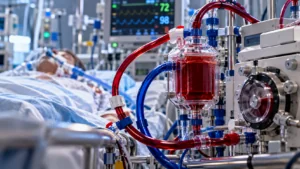
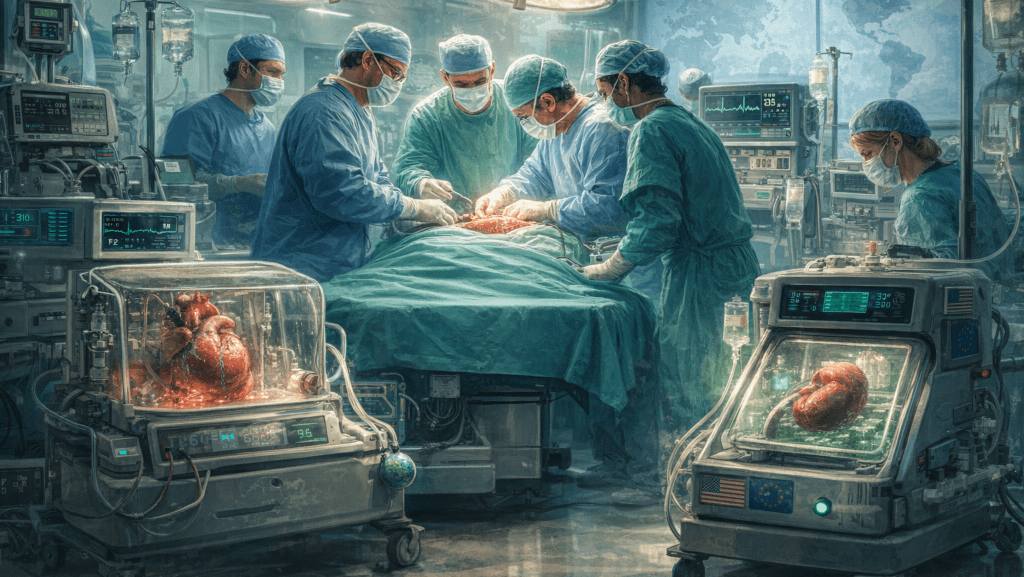
A suitable DCD donor became available 145 days after treatment began and 56 days after listing. The donor was a 19-year-old man with head trauma. The transplant team used thoracoabdominal normothermic regional perfusion to recover the organs after circulatory death. This technique restores warm oxygenated blood flow to the donor organs after the required hands-off period, allowing clinicians to assess function and reduce ischemic injury. In this case, the donor’s functional warm ischemic time was 20 minutes, and bypass was initiated rapidly. The team judged the heart, liver, and kidney suitable for transplantation after physiologic recovery and direct intraoperative assessment.
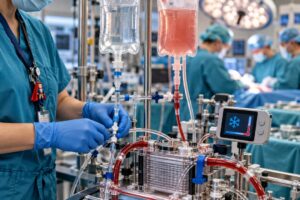
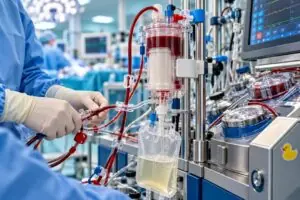
The article’s timeline figure on page 2 visually shows the procurement and transplant sequence, including the brief warm ischemic interval, initiation of normothermic regional perfusion, and the staggered implantation of the three organs. After recovery, the heart was placed in static cold storage, the liver was maintained on an ex vivo normothermic machine perfusion system, and the kidney was kept on hypothermic machine perfusion until implantation the following day. This multimodal preservation strategy was central to the success of the case because it minimized cold ischemic injury and gave the liver additional metabolic support while the heart transplant was being completed first.
The operations were performed sequentially. The heart transplant came first, with a cold ischemic time of 131 minutes. The liver transplant followed, with a cold ischemic time of 87 minutes and more than 300 minutes of normothermic machine perfusion. The kidney transplant was then completed the next day, with prolonged cold ischemic time but continuous machine preservation. The authors note that liver reperfusion caused minimal disturbance to the newly transplanted heart, an encouraging observation in such a high-risk multiorgan setting.
Postoperatively, the patient required temporary renal replacement therapy for three days. He also experienced several complications, including respiratory failure requiring tracheostomy, altered mental status, severe malnutrition, urinary tract infection, BK viremia, and ileus related to gastrointestinal amyloid involvement. Despite this complex recovery, these issues resolved before discharge. He left the hospital on postoperative day 45. At eight months, there was no evidence of heart, liver, or kidney graft dysfunction or rejection. Surveillance cardiac biopsies were negative, liver function remained stable, gastrointestinal function normalized, and kidney performance improved to a glomerular filtration rate above 60 mL/min/1.73 m² with a creatinine of 1.49 mg/dL and minimal proteinuria. Table 1 on page 3 shows these organ-specific outcomes over time, documenting stable liver enzymes, acceptable cardiac function, and recovering renal markers.
From an SEO and clinical relevance standpoint, this paper is especially notable for transplant innovation, DCD organ utilization, normothermic regional perfusion, AL amyloidosis treatment, and multiorgan transplant feasibility. The authors argue that normothermic recovery and storage strategies may expand the donor pool and create new options for patients who previously had very narrow or nearly impossible pathways to transplant. Because this is a single case report, it does not establish long-term effectiveness or generalizability. Even so, it provides compelling proof of concept that carefully selected DCD donors and advanced perfusion technologies can support successful heart-liver-kidney transplantation in a critically ill patient with systemic amyloidosis.