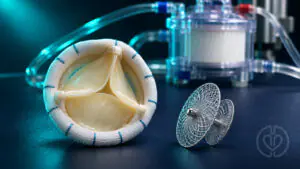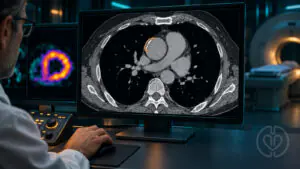
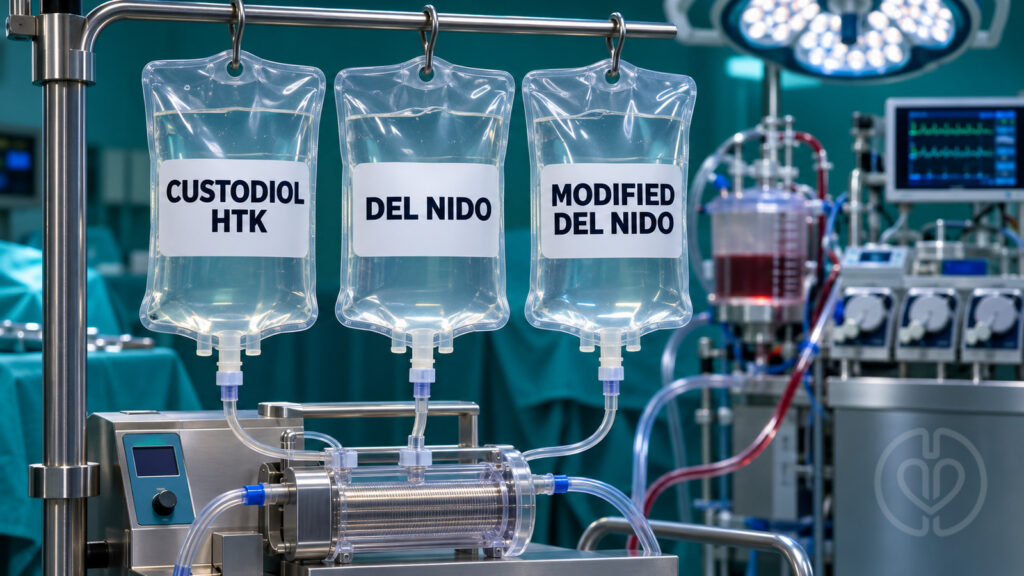
Single-dose cardioplegia with Custodiol (HTK), del Nido, or modified del Nido produced broadly similar postoperative myocardial injury profiles in a randomized trial of 99 adults undergoing elective cardiac surgery. Del Nido was associated with lower troponin release at two hours and fewer intraoperative transfusions, but neither finding establishes better long-term recovery or survival.
A Three-Way Comparison in Adult Cardiac Surgery
Lira and colleagues conducted the Cardioplegia Trial at Nossa Senhora da Conceição Hospital in southern Brazil. The study randomized 99 patients equally to HTK, conventional del Nido, or modified del Nido: 33 patients per group. Sixty-one underwent coronary artery bypass grafting, and 38 underwent valve surgery, all with cardiopulmonary bypass.
The participants had a mean age of approximately 63 years. Prior cardiac surgery, emergency procedures, and chronic renal failure defined by serum creatinine above 2.0 mg/dL were among the exclusions. The findings therefore require caution when considering urgent, redo, or more complex populations.
How the Single-Dose Cardioplegia Strategies Differed
The del Nido formulation used Plasma-Lyte as its crystalloid base, while modified del Nido used Ringer’s lactate. HTK differed in composition, administration volume, infusion duration, and redosing interval. Although described as single-dose strategies, the protocol permitted supplementary doses when the relevant time interval was exceeded.
The reported HTK induction volume was 1,500–2,000 mL, with supplementary half-doses permitted after three hours. Del Nido and modified del Nido induction doses were capped at 1,000 mL, with supplementary dosing permitted after 90 minutes. These are descriptions of the study protocol, rather than a stand-alone preparation or administration guide.
For perfusion teams, this means the comparison involved complete delivery strategies as well as solution chemistry. Differences in crystalloid exposure and redosing cannot be separated from the effects of the formulations themselves.
Troponin Findings: An Early Signal Without Sustained Separation
The primary endpoint was serial high-sensitivity cardiac troponin T, measured before cardioplegia and at two, 12, and 24 hours postoperatively. No primary-outcome measurements were missing.
At two hours, mean troponin T was 828 ng/L with del Nido, 1,286 ng/L with HTK, and 1,199 ng/L with modified del Nido. The investigators reported a between-group difference at that time point (p=0.023). The table reports these values as means with standard errors.
The early difference was not sustained at 12 or 24 hours. All groups showed postoperative troponin elevation, and the trial did not demonstrate a persistent biochemical advantage for one solution. An isolated early biomarker difference should not be treated as proof of superior clinical myocardial protection.
Transfusion and Electrolyte Findings
Intraoperative transfusion occurred in 26 of 33 HTK patients (78.8%), 14 of 33 del Nido patients (42.4%), and 22 of 33 modified del Nido patients (66.7%; overall p=0.008). This was an exploratory clinical finding rather than the primary outcome. It also concerns intraoperative transfusion specifically; postoperative transfusion requirements did not show a statistically significant difference.
The authors proposed lower crystalloid exposure and less hemodilution as possible explanations for the del Nido transfusion signal. The study does not isolate that mechanism or establish a transfusion benefit across other institutions and blood-management protocols.
HTK was associated with lower early postoperative sodium and potassium concentrations. The investigators described these shifts as transient and without apparent clinical consequences. The practical perfusion issue is attention to the solution’s electrolyte composition and delivered volume within the institution’s monitoring and correction protocol.
Clinical Outcomes Were Similar, but Equivalence Was Not Proven
Cardiopulmonary bypass and aortic cross-clamp times were similar. The investigators found no statistically significant differences in vasoactive-inotropic support, intra-aortic balloon pump use, ICU or hospital length of stay, changes in left ventricular ejection fraction, or major postoperative complications. Survival analysis also did not identify a difference between groups.
These observations do not establish formal equivalence or noninferiority. The sample-size calculation targeted troponin differences, and 33 patients per arm provide limited precision for uncommon events such as stroke, dialysis, myocardial infarction, and death. A nonsignificant result in a small study can coexist with clinically meaningful uncertainty.
Study Strengths and Important Limitations
Random allocation, concealed assignment, blinded outcome assessment, and complete primary-outcome data strengthen the comparison. Blinding was incomplete in the operating room: the perfusionist knew the assigned solution, and the surgical team could recognize HTK because its administration differed. The surgical team remained blinded between the two del Nido formulations.
The trial was conducted at one center and was powered for a biochemical endpoint. Echocardiography was performed within seven postoperative days rather than immediately after surgery, potentially missing transient ventricular dysfunction. The report also describes protocol amendments affecting the sample size, biomarker selection, eligibility, and delivery parameters.
Multiple outcomes and time points were analyzed without formal multiplicity correction. The authors acknowledge that some nominally significant findings do not persist with stringent adjustment. The early troponin and transfusion signals should therefore be treated as hypothesis-generating.
What This Means for Perfusion Practice
The study provides useful direct comparative data for three commonly discussed single-dose cardioplegia strategies. It supports reviewing myocardial protection as a combination of formulation, delivery, redosing, fluid balance, and team execution. It does not provide sufficient evidence to replace an established institutional protocol solely on the basis of an early troponin measurement.
Larger multicenter trials powered for clinical endpoints are needed to determine whether the observed differences translate into better patient outcomes and whether similar results apply to higher-risk operations.
Source and Disclosures
Lira KB, Delvaux RS, Spadini FA, et al. Comparison between three single-dose cardioplegic solutions in myocardial protection: Cardioplegia Trial – a double-blind randomised clinical trial. Heart. Published online May 28, 2026. doi:10.1136/heartjnl-2025-327683.
The research was supported by Nossa Senhora da Conceição Hospital, Conceição Hospital Group, Brazil. The authors declared no competing interests and stated that the funders had no role in study design, analysis, interpretation, or writing. Trial registration: RBR-7g5s66. The source article is open access under CC BY-NC 4.0. This is an independent IPA educational summary; the unchanged source PDF is provided below.