
Perfusion News

Restoring Life to the Liver: Normothermic Regional Perfusion in Modern Transplantation

Normothermic Regional Perfusion in Controlled Donation After Circulatory Death: Growing Evidence for Liver Transplantation

Normothermic regional perfusion (NRP) is reshaping controlled donation after circulatory death (cDCD) liver transplantation. By restoring oxygenated blood flow after death declaration, NRP reduces ischemia-reperfusion injury, lowers rates of early allograft dysfunction and biliary complications, and delivers graft and patient survival comparable to donation after brain death. This review synthesizes expanding global evidence supporting NRP as a new standard.

READ MORE
Incidence and Risk Factors of Limb Ischaemia

Incidence and Risk Factors of Limb Ischaemia in Adult Patients Receiving Veno-Arterial Extracorporeal Membrane Oxygenation: A Systematic Review and Meta-Analysis

Limb ischaemia is a serious complication of veno-arterial extracorporeal membrane oxygenation (V-A ECMO). This systematic review and meta-analysis of 17 studies involving 2,812 adults found a pooled limb ischaemia incidence of 16.9%. Peripheral arterial disease, unsuccessful percutaneous cannulation, and shorter patient height were significant risk factors, underscoring the need for early risk identification and preventive strategies in ECMO care.

READ MORE
Ultrafiltration 2024

Zero-Balance Ultrafiltration Reduces Postoperative Delirium After Cardiac Surgery with Cardiopulmonary Bypass: A Randomized Controlled Trial

This single-center randomized controlled trial evaluated whether adding zero-balance ultrafiltration (Z-BUF) to conventional ultrafiltration during cardiopulmonary bypass reduces postoperative delirium after cardiac surgery. Among 106 analyzed patients, Z-BUF significantly lowered delirium incidence within 7 postoperative days compared with conventional ultrafiltration alone, while no significant differences were observed in longer-term cognitive outcomes at 1 or 3 months.

READ MORE
Selective Ex Vivo Lung Perfusion in Donation After Circulatory Death Transplantation

Ex Vivo Lung Perfusion in Donation After Circulatory Death Lung Transplantation: A Systematic Review and Meta-Analysis

This systematic review and meta-analysis evaluated whether ex vivo lung perfusion (EVLP) improves outcomes in donation after circulatory death (DCD) lung transplantation. Across five observational studies including 654 patients, EVLP showed no significant differences in grade 3 primary graft dysfunction, ICU or hospital length of stay, short-term survival, pneumonia, or acute rejection compared with direct transplantation. Findings support selective rather than routine EVLP use.

READ MORE
Precision and Protection: Advanced Myocardial Preservation in Complex Cardiac Surgery

Custodial-HTK Cardioplegia in Conventional Cardiac Surgery: A Retrospective Analysis From UiTM

This retrospective cohort study from a Malaysian tertiary cardiac center compares Custodial-HTK cardioplegia with conventional blood cardioplegia in elective on-pump cardiac surgery. Although Custodial-HTK was preferentially used in higher-risk and more complex cases with lower baseline LVEF and longer bypass times, postoperative outcomes, ICU stay, hospital stay, and 30-day mortality were comparable, supporting its safety and effectiveness.

READ MORE
Global Teamwork in Modern Myocardial Protection: Alternative Base Solutions for del Nido Cardioplegia

Alternative Base Solutions for del Nido Cardioplegia: Composition, Rationale, and Clinical Evidence

This comprehensive review examines alternative crystalloid and whole-blood base solutions for del Nido cardioplegia, including normal saline, lactated Ringer’s, plain Ringer’s, Isolyte S, Ionosteril, and whole blood. Drawing on experimental models, randomized trials, and clinical studies, the article demonstrates that these alternatives provide myocardial protection and postoperative outcomes comparable to Plasma-Lyte A when appropriately buffered, supporting cost-effective and globally accessible cardiac surgery practice.

READ MORE
Active Myocardial Protection During Cardioplegic Arrest

Molecular and Cellular Mechanisms of Cardioplegic Protection in Surgical Myocardial Revascularization

This comprehensive review explores how cardioplegia actively protects the myocardium during coronary artery bypass grafting. Beyond inducing cardiac arrest, cardioplegic solutions modulate calcium homeostasis, mitochondrial function, oxidative stress, inflammation, and apoptosis. By suppressing electromechanical activity and metabolic demand, cardioplegia prolongs ischemic tolerance and mitigates reperfusion injury, offering critical insights for optimizing myocardial protection strategies in modern cardiac surgery.

READ MORE
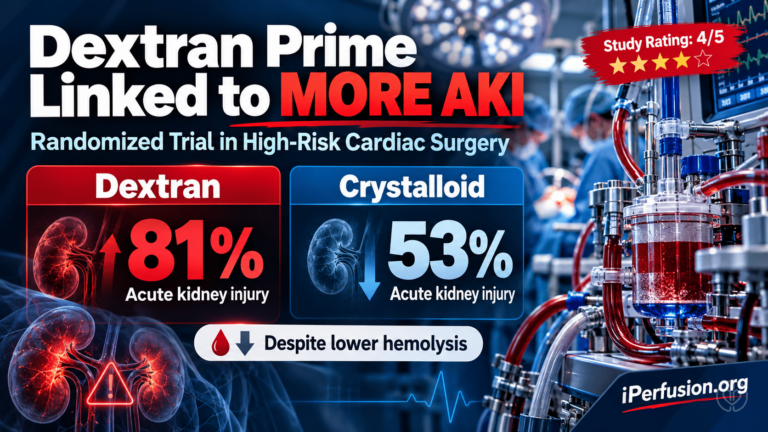
Comparison of 6% Hydroxyethyl Starch 130/0.4 vs 5% Albumin

Comparison of 6% Hydroxyethyl Starch 130/0.4 vs 5% Albumin in Cardiopulmonary Bypass for Cardiac Surgery

This meta-analysis evaluated 12 randomized trials (908 patients) comparing 6% hydroxyethyl starch (HES) 130/0.4 with 5% albumin during cardiopulmonary bypass in cardiac surgery. Most outcomes—including blood loss, transfusion rates, ICU stay, hospital stay, and mortality—were similar between groups. However, HES use was associated with a significantly higher risk of acute kidney injury, highlighting renal safety concerns despite comparable hemodynamic efficacy.

READ MORE
Determination of Insensible Water Loss and Sodium Accumulation Behavior from the Medtronic Nautilus ECMO Oxygenator: An In Vitro Study

Determination of Insensible Water Loss and Sodium Accumulation Behavior from the Medtronic Nautilus ECMO Oxygenator: An In Vitro Study

This in vitro study examined insensible water loss and sodium accumulation in the Medtronic Nautilus ECMO oxygenator. Using varying sweep gas rates over 24 hours, researchers found a strong linear relationship between sweep gas flow and fluid loss. The rate was approximately 72.5 mL/day per 1 L/min sweep gas. Sodium accumulation was observed but not statistically confirmed due to sample size. These findings are critical for managing fluid balance and hypernatremia risk in ECMO patients.

READ MORE

Tranexamic Acid Does Not Have a Dose-Dependent Effect on Postoperative Delirium After Cardiac Surgery — A Retrospective Cohort Study

This retrospective study examined over 5,500 patients undergoing cardiac surgery to assess whether higher doses of tranexamic acid (TXA) reduce postoperative delirium (PD). Despite TXA’s known anti-inflammatory effects and role in stabilizing the blood-brain barrier, the study found no significant dose-dependent reduction in PD. CAM-ICU assessments showed similar PD rates across all dosing groups, highlighting PD’s multifactorial nature and the need for further prospective trials.

READ MORE