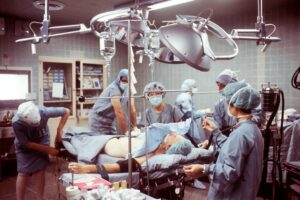

Cardiopulmonary bypass (CPB) is an essential component of modern cardiac surgery, allowing surgeons to temporarily replace heart and lung function during complex procedures. One important technical aspect of CPB management involves minimizing hemodilution, which occurs when crystalloid solutions used to prime the bypass circuit dilute the patient’s blood. Excessive hemodilution can reduce hematocrit levels and increase the likelihood of blood transfusions. As a result, clinicians continuously seek methods to reduce prime volume and preserve the patient’s native blood components.
The study “Initiating Cardiopulmonary Bypass Using a Dry Venous Line: Implications and Analysis” examines an alternative strategy to reduce hemodilution: initiating CPB using a dry venous line in combination with vacuum-assisted venous drainage (VAVD). This method removes crystalloid fluid from the venous tubing before initiating bypass so that the patient does not receive that additional fluid volume. While this technique may reduce hemodilution, it may also introduce risks, particularly the formation of gaseous microemboli (GME) within the extracorporeal circuit.
Gaseous microemboli are small air bubbles that can enter the bloodstream during CPB. These bubbles can travel through the circulation and potentially contribute to neurological complications or other adverse outcomes. Previous studies have demonstrated that increased microemboli exposure during bypass may correlate with postoperative cognitive dysfunction or neurological deficits. Therefore, balancing blood conservation strategies with patient safety remains an important clinical challenge.
To investigate the potential risks associated with dry venous line initiation, the researchers designed a controlled laboratory experiment using a simulated adult CPB circuit. The experimental setup included a modern extracorporeal circuit with a LivaNova Inspire 8F oxygenator that contained an integrated arterial filter. The circuit was connected to a heart-lung machine and various sensors to measure gaseous microemboli throughout the system.
A specialized Emboli Detection and Classification (EDAC) air quantifier was used to measure the number, size, and total volume of microemboli traveling through the circuit. Three sensors were strategically placed within the circuit to detect emboli at different locations: after the venous reservoir, after the oxygenator, and after a hypobaric oxygenator designed to remove residual air. These measurements allowed the researchers to evaluate how many emboli were produced and how many would potentially reach a patient during CPB.
The experiment compared several different circuit conditions. The control group used a traditional primed venous line, meaning the tubing contained crystalloid solution prior to bypass initiation. In contrast, the experimental groups used a dry venous line, where the crystalloid was drained before initiation. The dry-line groups were further divided based on vacuum pressure levels and initiation technique.
Two levels of vacuum pressure were tested: −20 mmHg and −40 mmHg. Two initiation techniques were also evaluated. The first method, called instant initiation, began pumping immediately when the venous and arterial lines were unclamped. The second method, delayed initiation, allowed blood volume to partially fill the reservoir before starting the arterial pump. Each experimental condition was repeated across multiple trials to ensure reliable comparisons.
The results demonstrated clear differences between the primed venous line and dry venous line techniques. The control trials with primed venous lines produced the lowest number of gaseous microemboli within the circuit. In contrast, the dry venous line trials produced substantially higher GME counts and volumes. These differences were statistically significant when comparing the control group to both instant and delayed initiation groups.
The study also revealed that the method of initiation influenced microemboli formation. Instant initiation resulted in significantly higher GME counts than delayed initiation. When the circuit was allowed to partially fill before pump activation, fewer microemboli were detected. This finding suggests that gradual filling of the circuit may help reduce turbulence and air-fluid interactions that produce bubbles.
Vacuum pressure also played an important role in microemboli generation. Higher VAVD pressures were associated with increased GME production. Trials conducted with −40 mmHg pressure produced the highest microemboli counts and volumes, whereas lower vacuum pressure levels produced fewer bubbles. However, the statistical difference between the −20 mmHg and −40 mmHg groups was not always significant, suggesting that other factors may also influence emboli formation.
Another notable observation was that most microemboli were detected within the first 45 seconds of CPB initiation, with peak detection occurring around 15 seconds. This indicates that the early phase of bypass initiation is the most critical period for emboli generation. After this initial phase, emboli production decreased substantially.
The study also demonstrated the effectiveness of modern CPB equipment in removing microemboli. The integrated arterial filter within the oxygenator significantly reduced both the size and number of bubbles traveling through the circuit. This finding supports previous research showing that arterial filters play a vital role in protecting patients from embolic exposure during CPB.
Despite these findings, the study has several limitations. The experiments used 0.9% saline rather than whole blood, which does not fully replicate the viscosity and rheological properties of human blood. Blood’s non-Newtonian behavior could influence bubble formation differently than saline. Additionally, the study used a single type of circuit configuration, meaning results may vary with different oxygenators, pumps, or filtration systems.
Nevertheless, the study provides valuable insights into the safety implications of dry venous line initiation techniques. While dry venous lines can reduce hemodilution and preserve hematocrit, they may increase the risk of microemboli formation within the CPB circuit. The authors emphasize that although the measured emboli volumes were relatively small, clinicians should aim to minimize patient exposure whenever possible.
The study concludes that if a dry venous line technique is used, the safest approach may involve lower vacuum pressures and delayed CPB initiation. These strategies appear to reduce the number of gaseous microemboli produced during bypass initiation. Ultimately, the findings highlight the need for continued research to optimize CPB techniques that balance blood conservation with patient safety.