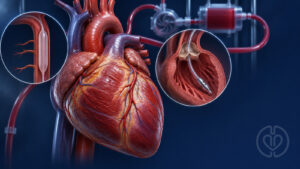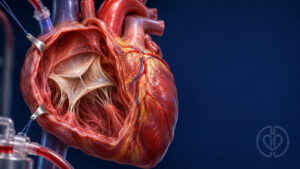

Cardiac surgery and heart transplantation expose the myocardium to an unavoidable sequence: restricted blood supply followed by reperfusion. Restoring flow is essential, but it can also amplify injury through oxidative stress, calcium overload, inflammation, microvascular dysfunction and regulated cell death. A new bibliometric review maps how research on this problem has developed and where efforts to protect the heart are now concentrated.
What the researchers mapped
Guzmán-Ruvalcaba and colleagues analyzed 4,565 English-language articles, reviews and proceedings papers indexed in the Web of Science Core Collection across complete publication years 1979–2025. Their February 2026 search focused on ischemia–reperfusion injury and protective approaches in cardiac surgery or transplantation. They examined publication output, citations, collaboration, co-occurring keywords, influential references and changing themes. This is a map of published research, not a pooled test of treatment effectiveness.
Cardioplegia leads in volume; newer ideas lead in citation attention
Cardioplegia and its variants account for the largest body of intervention-related publications. The highest citations per document, however, cluster around more recent topics such as extracellular vesicles, melatonin and microRNA, many of which remain predominantly preclinical. The authors distinguish research volume, citation impact and clinical orientation: these measures place interventions in different orders and should not be treated as proof of clinical benefit.
Ischemic conditioning forms a central intellectual lineage in the cited-reference analysis. The authors also describe a shift in research vocabulary from inflammation and nitric oxide toward mitochondria, regulated cell death, exosomes, ferroptosis and preservation of hearts donated after circulatory death. About 43% of the corpus appeared in 2015–2025, while the clinically oriented share has remained roughly 38–39% since 2010.
Why this matters to perfusion and transplantation
In on-pump surgery, cross-clamping and cardioplegic arrest create a controlled ischemic interval followed by reperfusion. In transplantation, storage and transport can lengthen global ischemia before the graft encounters recipient blood. These different settings explain why myocardial protection, reperfusion conditions and machine perfusion continue to attract attention. The review helps investigators find established research networks and emerging questions; it does not recommend a new perfusion protocol or establish that any highlighted strategy improves patient outcomes.
How to interpret the evidence
The analysis uses one database and English-language records. Its search can miss relevant papers, especially older work that predates systematic indexing of abstracts and keywords. Citation counts are a February 2026 snapshot that favor older publications, and the authors report three duplicate records and 15 retracted papers retained in the corpus. Keyword-based estimates of clinical orientation do not separate clinical trials from reviews. No formal quality or risk-of-bias assessment of individual studies was performed. The authors declare no competing interests and describe their funding in the source paper.
Source
Guzmán-Ruvalcaba MJ, et al. Mapping the global research landscape of ischemia–reperfusion injury in cardiac surgery and transplantation: a bibliometric analysis. Journal of Cardiothoracic Surgery. 2026;21:868. doi:10.1186/s13019-026-04777-4.