Heart failure (HF) remains a critical public health issue, with heart transplantation (HT) as the definitive treatment for end-stage HF. The use of mechanical circulatory support, particularly left ventricular assist devices (LVADs), has grown, offering a bridge-to-transplant (BTT) solution for patients awaiting suitable donor hearts. This retrospective study assessed the clinical outcomes of BTT patients compared to those undergoing direct-to-transplant (DTT) without mechanical support.
A total of 105 patients, treated between 2010 and 2020, were included: 28 received LVADs as BTT, and 77 underwent DTT. Key endpoints included overall survival at 1 and 7 years and secondary outcomes such as organ rejection, cerebrovascular events, renal failure, and cardiac allograft vasculopathy (CAV). Statistical methods included Kaplan-Meier survival analysis and comparison of complications between the groups.
The results demonstrated no significant difference in survival rates between BTT and DTT groups at 1 year (89.3% vs. 85.7%) or 7 years (80.8% vs. 77.1%). However, BTT patients experienced longer cardiopulmonary bypass and cross-clamp times during surgery due to the technical complexities of LVAD removal. Despite these challenges, 30-day mortality rates remained comparable between groups (3.6% for BTT vs. 5.2% for DTT).
Secondary outcomes were mostly similar. No notable differences were observed in rates of major complications such as organ rejection or CAV. Nonetheless, the BTT group had a higher incidence of cerebrovascular events (10.7% vs. 2.6%), reflecting a recognized risk of LVAD-related complications. Additionally, during the bridge period, BTT patients encountered issues like gastrointestinal bleeding, infections, and device-related thrombotic events, but these did not adversely affect long-term transplant outcomes.
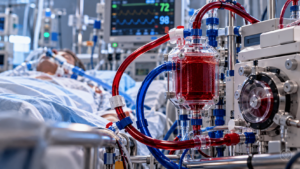
The study highlights the viability of LVADs as a bridging strategy, enabling severely ill patients to survive the waiting period for transplantation. Technological advancements in LVADs, including third-generation devices like HeartMate III, have contributed to improved outcomes by reducing complications associated with older models. The findings also suggest that the use of extracorporeal membrane oxygenation (ECMO) post-transplantation in both groups may support recovery and optimize survival.
Limitations include the study’s single-center and retrospective design, the small sample size, and the predominant use of HeartWare devices, which were later withdrawn due to safety concerns. The exclusion of patients with non-ischemic or non-dilated cardiomyopathies also limits generalizability.
In conclusion, LVADs provide an effective bridge-to-transplant option without adversely affecting survival or increasing post-transplant complications. The data supports their continued use in managing advanced heart failure patients, emphasizing the importance of careful patient monitoring to mitigate LVAD-related risks.