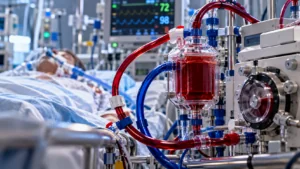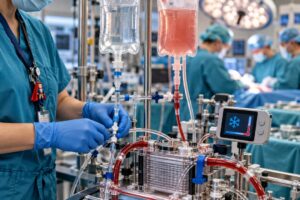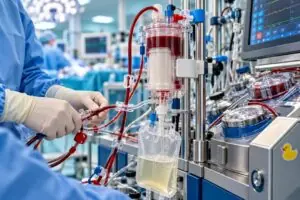
Extracorporeal membrane oxygenation (ECMO) has emerged as a critical life-saving technology for patients experiencing severe cardiogenic shock (CS), particularly when conventional therapies fail. The article “Global research trends and hotspots in extracorporeal membrane oxygenation for cardiogenic shock: a bibliometric review and knowledge mapping approach (1990–2024)” provides a comprehensive overview of how the scientific literature surrounding ECMO in cardiogenic shock has evolved over more than three decades. Through bibliometric methods and knowledge mapping tools such as CiteSpace and VOSviewer, the study identifies influential authors, institutions, global collaborations, and emerging research themes shaping this rapidly expanding field.
Cardiogenic shock represents one of the most severe manifestations of acute cardiac failure, commonly resulting from acute myocardial infarction, myocarditis, or complications following cardiac surgery. Despite advances in pharmacologic treatment and mechanical circulatory support technologies, mortality rates remain high. ECMO, particularly veno-arterial ECMO (VA-ECMO), provides temporary cardiopulmonary support by maintaining systemic circulation and oxygenation while allowing the heart to recover or while bridging the patient to advanced therapies such as ventricular assist devices (VADs) or transplantation.
To better understand global research activity in this area, the investigators conducted a comprehensive literature search using the Web of Science Core Collection. The analysis included 701 original articles published between 1990 and 2024, involving more than 4,400 authors across 1,105 institutions and 55 countries. The study demonstrates a consistent upward trend in publications, particularly over the past decade, reflecting increasing interest in ECMO as an essential tool for managing critically ill cardiac patients. The growth in publications also mirrors improvements in ECMO technology, expanding clinical indications, and broader institutional adoption worldwide.
The geographic distribution of ECMO research reveals clear global leadership patterns. The United States produced the largest number of publications and citations, followed by Germany, China, France, and Italy. These countries form the central hubs of international collaboration in ECMO research. Academic centers such as Columbia University, Capital Medical University, and Sungkyunkwan University emerged as particularly productive institutions. The study also highlights a strong research network spanning North America, Europe, and East Asia, emphasizing the collaborative nature of modern ECMO investigation.
Another important aspect of the analysis involves identifying the most influential researchers and landmark publications in the field. Authors such as Alain Combes, Daniel Brodie, and Koji Takeda were among the most prolific contributors, playing key roles in advancing ECMO practice and clinical research. Highly cited studies introduced important clinical tools and insights, including prognostic scoring systems like the SAVE (Survival After Veno-Arterial ECMO) score and the ENCOURAGE risk score, which help clinicians predict survival outcomes in patients receiving ECMO for cardiogenic shock.
The bibliometric analysis identified four major thematic research clusters that define the current scientific landscape of ECMO in cardiogenic shock.
The first cluster focuses on postcardiotomy cardiogenic shock, a condition that occurs after cardiac surgery when the heart fails to maintain adequate circulation. In these cases, ECMO often serves as a rescue therapy when conventional treatments cannot restore hemodynamic stability. Research within this cluster explores mortality predictors, complications, and strategies for optimizing patient selection.
The second cluster centers on cardiac arrest and extracorporeal cardiopulmonary resuscitation (ECPR). In this context, ECMO is used to provide circulatory support during prolonged resuscitation attempts. Increasing evidence suggests that ECMO-assisted resuscitation may improve survival and neurological outcomes in carefully selected patients with refractory cardiac arrest.
The third cluster addresses acute myocardial infarction complicated by cardiogenic shock, where ECMO is integrated with mechanical circulatory support devices such as intra-aortic balloon pumps or Impella systems. Research in this area investigates the timing of ECMO initiation, hemodynamic benefits, and potential complications such as bleeding or limb ischemia.
The fourth cluster explores advanced heart failure management, particularly ECMO as a bridge to long-term therapies including ventricular assist devices and heart transplantation. In patients with severe cardiac failure, ECMO may temporarily stabilize circulation while clinicians evaluate candidacy for durable mechanical support or transplant.
One of the most important findings of the study is the shift in research focus over time. Early ECMO literature primarily examined survival rates and feasibility of the technology. However, more recent research increasingly emphasizes protocol-driven care, predictive modeling, risk stratification, and long-term patient outcomes. This evolution reflects a maturing field moving beyond experimental rescue therapy toward standardized clinical practice.
Keyword trend analysis further highlights emerging priorities in ECMO research. Topics such as mechanical circulatory support, risk prediction models, guideline development, and cost-effectiveness analysis have gained prominence in recent years. These trends suggest that future ECMO research will not only focus on improving survival but also on optimizing patient selection, resource allocation, and quality of life after treatment.
The study concludes that ECMO research for cardiogenic shock is experiencing rapid global expansion, with growing collaboration among institutions and increasing methodological sophistication. As ECMO technology becomes more widely adopted, researchers emphasize the importance of developing standardized treatment protocols, large multicenter registries, and international guidelines to ensure optimal patient outcomes.
Overall, this bibliometric review provides a valuable roadmap for clinicians, researchers, and policymakers interested in ECMO therapy. By identifying major research hotspots and emerging directions, the study helps guide future investigations aimed at improving the management of cardiogenic shock and advancing the field of mechanical circulatory support.