
Early cooling after cardiac arrest did not improve overall survival or favorable neurologic recovery in a systematic review of 11 randomized trials. The review highlights an important distinction: initiating hypothermic temperature control during resuscitation or soon after return of spontaneous circulation does not mean that the intended temperature is reached quickly. Whether genuinely rapid achievement of the target could change outcomes remains an unanswered research question.
What the Review Examined
Alotaibi and colleagues evaluated prospective randomized controlled trials comparing early versus later initiation of hypothermic temperature control in comatose adult cardiac arrest patients. Early treatment was defined as beginning cooling during cardiopulmonary resuscitation or within 30 minutes after return of spontaneous circulation (ROSC). Later treatment began after that window. The review addressed timing of cooling rather than directly comparing hypothermia with normothermia.
The investigators searched published literature, trial registries, and preprint sources, with the search updated through February 20, 2025. Eleven trials met the eligibility criteria after screening 7,269 citations. Ten studies initiated treatment before hospital admission, while one began in hospital. Most used cold intravenous fluids; two used transnasal evaporative cooling, and one investigated a pharyngeal cooling device. Several were pilot or feasibility studies.
Early Cooling After Cardiac Arrest: Main Results
Ten studies contributed neurologic outcome data for 4,814 patients. Favorable neurologic outcomes occurred in 543 patients allocated to earlier cooling and 514 allocated to later cooling. The Results section reports a pooled risk ratio of 1.03, with a 95% confidence interval of 0.94–1.14, indicating no statistically significant improvement. The abstract gives a slightly different point estimate of 1.01 with the same confidence interval; this summary uses the detailed Results section.
Survival data were available for 4,922 patients. The pooled survival risk ratio was 1.01, with a 95% confidence interval of 0.92–1.11. Analyses by induction method, timing, and presenting rhythm did not demonstrate a clear overall survival advantage. These findings apply to the approaches tested in the included trials and should not be interpreted as a direct test of every possible cooling strategy.
Starting Treatment and Reaching the Target Are Different
The review’s central question concerns actual temperature achievement. Reported median times to the intended temperature ranged from 38 to 360 minutes. Although earlier treatment generally lowered temperature by hospital arrival, it did not consistently produce rapid attainment of the intended 32–34°C range. Reporting of successful achievement and maintenance was limited, further complicating interpretation.
The authors propose that delays could miss a biologically important interval for limiting reperfusion injury. That explanation draws on experimental work describing early oxidative injury after restoration of circulation. It is a hypothesis rather than a demonstrated reason for the clinical trial results. The review does not establish a human treatment threshold of 30 minutes, nor does it demonstrate that reaching a target within that interval would improve recovery.
Cooling Method and Safety Signals
Cold-fluid administration deserves particular attention because induction technique may affect both temperature and circulation. The pooled rearrest estimate favored later cooling, with a risk ratio of 1.19 for earlier cooling and a 95% confidence interval of 1.00–1.42. However, the trial-sequential-analysis-adjusted interval was much wider, 0.58–2.40, emphasizing substantial uncertainty about this safety signal.
Pulmonary edema was reported in four studies, with a pooled risk ratio of 1.12 and a 95% confidence interval of 0.71–1.75. This was not a statistically significant difference. The review discusses concerns about volume loading, but its pooled results do not demonstrate a definite increase in pulmonary edema across all earlier-cooling approaches. Adverse events should therefore be interpreted by method and with attention to incomplete reporting.
Transnasal evaporative cooling produced more nasal bleeding and discoloration in the two studies reporting those events. Estimates were imprecise, with wide confidence intervals. These complications underline why a faster cooling technique cannot be judged solely by its temperature curve; feasibility, circulatory consequences, local injury, and patient-centered outcomes also matter.
A Subgroup Signal That Needs Confirmation
Patients with shockable rhythms receiving transnasal evaporative cooling during resuscitation showed a possible neurologic benefit, with a risk ratio of 1.40 and a 95% confidence interval of 1.00–1.96. The authors describe the result as falling short of their predefined statistical threshold. It should be treated as exploratory, particularly because it arises from a limited subgroup within a broader analysis that did not show overall benefit.
The finding helps define a research question about patient selection, induction method, and actual cooling speed. It does not establish a clinical indication for routine transnasal cooling or demonstrate superiority over other contemporary temperature-control strategies.
Relevance for Perfusion and Resuscitation Teams
For perfusionists, the review reinforces the value of documenting the full treatment timeline: arrest, resuscitation, ROSC, initiation of temperature intervention, and actual target achievement. Temperature measurement site also matters. The included studies used a mixture of core and noncore measurements, including tympanic readings, which can complicate comparisons between trials and between clinical pathways.
This analysis does not directly evaluate an extracorporeal cardiopulmonary resuscitation protocol, a cardiopulmonary bypass cooling strategy, or a specific ECMO heat-exchanger intervention. Applying its findings to those settings requires care. Its practical educational contribution is to separate the prescribed intervention from the intervention actually delivered and to keep neurologic recovery and survival central when assessing a temperature-management approach.
Limitations and Interpretation
Eight included studies were judged at high risk of bias, and three raised some concerns. Neurologic outcomes were measured inconsistently: some studies used formal scales, while others relied on discharge destination. Follow-up did not extend beyond 90 days in the included studies. Differences in induction methods, treatment protocols, temperature measurement, and outcome assessment limit how precisely the pooled findings answer the question of truly rapid target achievement.
The authors assessed certainty as moderate for survival and neurologic outcomes and low to very low for adverse events. The review supports the conclusion that earlier initiation, as tested, did not improve overall outcomes. It does not justify abandoning structured temperature control or establish a new bedside temperature target. Clinical protocols should be interpreted using current resuscitation guidance rather than this timing review alone.
Disclosures include institutional industry funding reported for one author and development of thiometallate approaches to reperfusion injury by two authors. The original article provides the full details.
Original Article
Alotaibi KS, Saleem N, Snow TAC, Arina P, Dyson A, Singer M. Does Time to Achieve a Targeted Body Temperature Matter for Survivors of Cardiac Arrest? A Systematic Review and Meta-Analysis. Critical Care Medicine. 2026;54(2):312–323. doi:10.1097/CCM.0000000000006964.
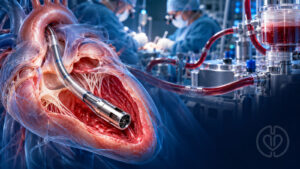
This independently written educational summary accompanies the unchanged source PDF. The cover is an AI-generated editorial illustration.