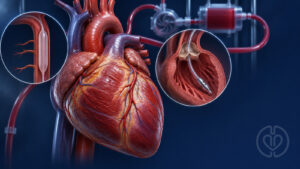
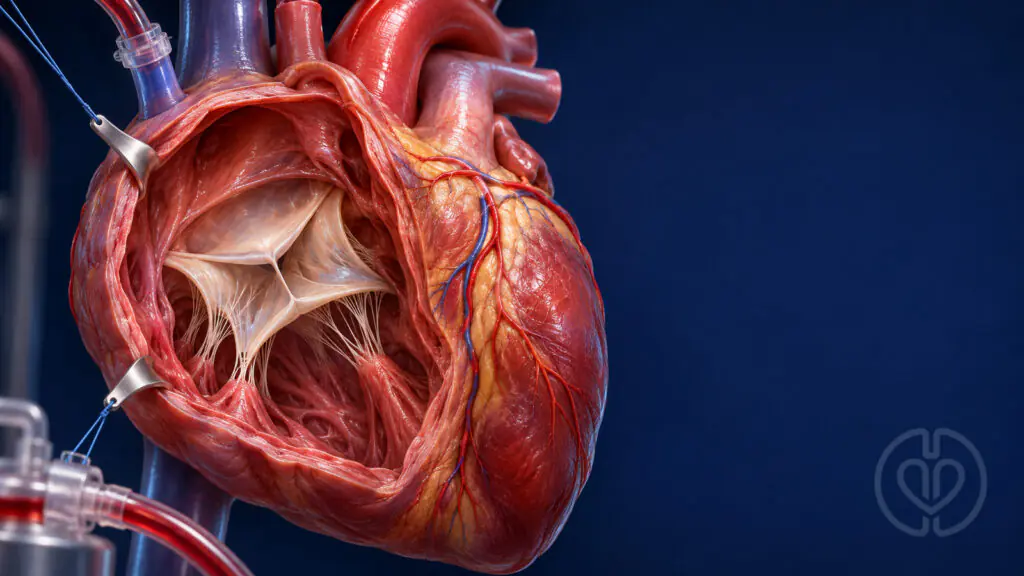
Beating-heart tricuspid valve surgery offers a potential opportunity to avoid cardioplegic arrest and observe conduction changes during the operation. Whether these theoretical advantages translate into fewer permanent pacemakers or better survival is less certain. A systematic review by Caldonazo and colleagues compared beating-heart and arrested-heart techniques for isolated tricuspid valve surgery and found no statistically significant differences in the outcomes examined.
Study Design and Population
The investigators searched Ovid MEDLINE, Web of Science, and the Cochrane Library in October 2023. The review was registered with PROSPERO (CRD42024518304) and followed PRISMA reporting principles. Of 1,157 records identified, six observational cohort studies met the inclusion criteria.
The included reports were published between 2012 and 2022 and represented 767 patients across centers in Germany, Austria, Turkey, France, and Iran. They included isolated tricuspid valve repair and replacement. The review used random-effects analyses, and the number of patients contributing to each pooled outcome differed from the overall study population. No randomized trials contributed to the final analysis.
Permanent Pacemaker Implantation
The primary endpoint was postoperative permanent pacemaker implantation. Four studies involving 537 patients contributed to this analysis. The pooled odds ratio for beating-heart versus arrested-heart surgery was 0.83 (95% confidence interval 0.45–1.51; P = 0.54).
Reported pacemaker rates ranged from 6.3% to 12.5% in beating-heart groups and from 7.1% to 18.2% in arrested-heart groups. Although the pooled point estimate favored beating-heart surgery, the confidence interval crossed 1. The results therefore did not demonstrate a reduction in pacemaker implantation and should not be interpreted as proof that the techniques are equivalent.
The authors explain that a beating-heart approach might permit recognition of a conduction disturbance caused by a suture and allow corrective action during surgery. However, this plausible mechanism did not produce a clear benefit in the available comparative data. The studies also lacked consistent information about the timing and thresholds used to decide on postoperative pacemaker implantation.
Survival and Other Clinical Outcomes
The investigators reconstructed time-to-event data from four published Kaplan–Meier curves to examine long-term survival. This approach estimates patient-level survival information from reported curves; it does not provide access to the original individual clinical records. The reconstructed analysis included 538 patients and found no significant difference between strategies, with a hazard ratio of 0.83 (95% confidence interval 0.61–1.13; P = 0.24).
Short-term mortality, defined as in-hospital or 30-day mortality, also did not differ significantly. Across six studies and 619 patients, the pooled odds ratio was 1.03 (95% confidence interval 0.56–1.87). No significant differences were detected in cardiopulmonary bypass duration, procedural duration, intensive care stay, hospital stay, or perioperative stroke.
These negative comparisons do not exclude clinically important differences. In particular, the stroke estimate was imprecise, with a confidence interval extending from 0.10 to 4.14. The survival curves covered an observation period of up to 14 years, but follow-up was uneven, and the authors cautioned that fluctuations after six years could reflect limited long-term data.
Implications for Perfusion and Myocardial Protection
For perfusion teams, the study addresses a familiar distinction: maintaining a beating heart during an isolated valve operation versus using an arrested-heart strategy. Beating-heart surgery in this context should not be confused with off-pump surgery; cardiopulmonary bypass duration was a measured outcome in the comparison.
The review did not show a significant reduction in bypass time with the beating-heart approach. It also does not establish that avoiding cardioplegic arrest improves survival in this population. The authors note that isolated tricuspid procedures may involve relatively short operative periods, and their findings should not automatically be extended to tricuspid surgery performed alongside other cardiac procedures.
The evidence supports a measured interpretation of technique selection rather than a universal preference. Patient characteristics, the underlying valve pathology, and procedural requirements remain important context that this pooled comparison could not fully resolve.
Limitations and Remaining Questions
All included studies were observational, leaving the analysis vulnerable to treatment-selection bias and residual confounding. Surgical era, center experience, minimally invasive approaches, and differences in patient complexity could influence outcomes independently of whether the heart was beating or arrested.
The review could not adequately separate patients with endocarditis from those with other indications, assess right ventricular dysfunction as an independent influence, or consistently account for preexisting conduction abnormalities and concomitant atrial fibrillation procedures. These omissions are particularly relevant to a study centered on pacemaker requirements.
The principal finding is that the available comparative literature has not demonstrated better major outcomes with either strategy. Larger studies with randomized designs and consistent outcome definitions are needed before drawing stronger conclusions about superiority or equivalence.
Original Article
Caldonazo T, Kirov H, Niedworok I, Runkel A, Fischer J, Mukharyamov M, Doenst T. Beating Versus Arrested Heart Technique for Isolated Tricuspid Valve Surgery: A Meta-Analysis of Reconstructed Time-to-Event Data. Innovations. 2025;20(4). doi:10.1177/15569845251351904.
The authors declared no potential conflicts of interest. Funding for Tulio Caldonazo was reported from the German Research Foundation, German Heart Foundation, and the Interdisciplinary Center of Clinical Research of the Medical Faculty Jena.