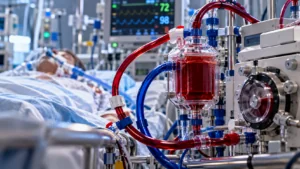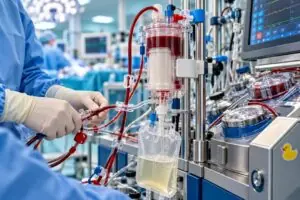
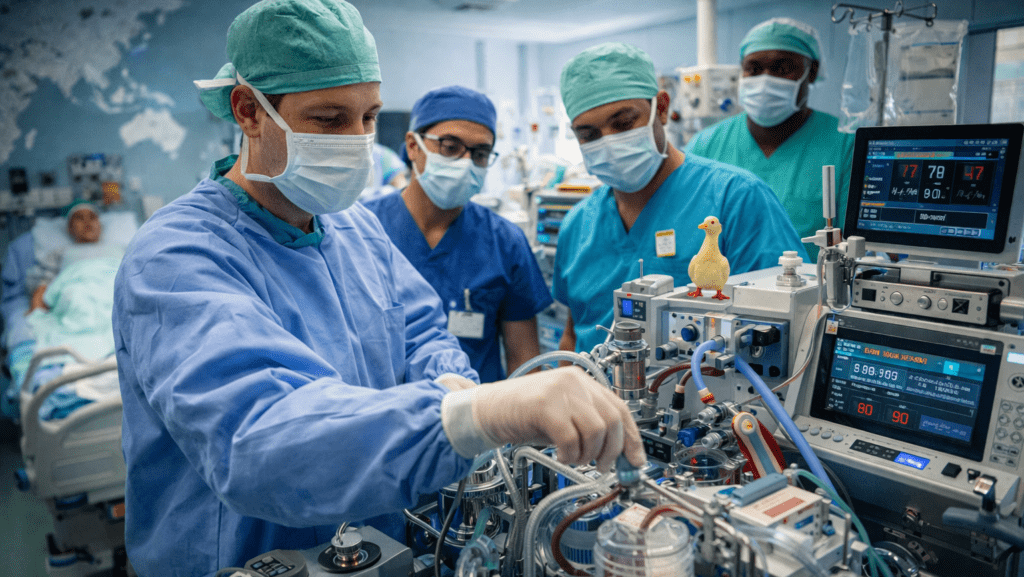
Extracorporeal Membrane Oxygenation (ECMO) has become a cornerstone therapy for patients with refractory cardiac and respiratory failure. As outlined in Redefining the Role of Perfusionists in ECMO: From Technical Operators to Clinical Stakeholders, the rapid expansion of ECMO technology and its increasing clinical complexity demand a reassessment of team dynamics within ECMO programs . The authors argue that perfusionists—traditionally viewed as technical operators responsible for circuit setup and maintenance—must be recognized as essential clinical stakeholders across the entire ECMO continuum of care.
Modern ECMO management requires seamless collaboration among intensivists, cardiac surgeons, anesthesiologists, nurses, respiratory therapists, and perfusionists. However, despite their highly specialized training and direct oversight of extracorporeal circulation systems, perfusionists are frequently excluded from key decision-making processes. This structural gap may have implications for patient safety, workflow efficiency, and long-term program development.
Perfusionists are highly trained professionals, often holding advanced degrees with specialized education in cardiovascular physiology, extracorporeal circulation, anticoagulation management, and mechanical circulatory support systems. Their expertise spans circuit configuration, flow dynamics, membrane gas exchange, blood conservation strategies, device troubleshooting, and anticoagulation protocols. In addition to managing heart-lung machines, perfusionists oversee multiple mechanical circulatory support devices, including intra-aortic balloon pumps (IABP), Impella systems, and ventricular assist devices (VADs), many of which are used concurrently with ECMO .
The article emphasizes that ECMO care extends far beyond initial cannulation and circuit initiation. Perfusionists frequently participate in ECMO retrieval teams, facilitating safe transport of critically ill patients. They support ECMO ambulation programs and physiotherapy initiatives, contributing to early mobilization strategies that are increasingly recognized as beneficial for recovery. Despite these contributions, perfusionists are often absent from multidisciplinary ICU rounds, where daily therapeutic strategies are determined.
This omission is particularly concerning given that many ECMO-related complications are circuit-specific. Issues such as oxygenator failure, increased transmembrane pressures, hemolysis, thrombus formation, and recirculation require in-depth technical and physiological insight. The article notes that excluding the professional most intimately familiar with these circuit parameters represents a potential safety vulnerability . Routine inclusion of perfusionists in ICU rounds could enhance early detection of mechanical or anticoagulation-related complications, allowing for more timely interventions and optimized patient management.
Beyond daily care, the authors highlight perfusionists’ limited participation in morbidity and mortality (M&M) conferences, multidisciplinary team (MDT) meetings, institutional audits, and quality improvement initiatives. ECMO is a technology-intensive therapy; therefore, excluding technical experts from programmatic reviews risks incomplete root-cause analysis and missed opportunities for systemic improvement. Perfusionists possess granular knowledge of circuit performance and device-related adverse events, making their perspective critical to continuous quality assurance and patient safety efforts.
Academic underrepresentation is another concern raised in the article. Despite being custodians of valuable circuit-level data, perfusionists remain underrepresented in ECMO research and scholarly publications. The authors advocate for greater involvement of perfusionists in clinical trials, registry contributions, hypothesis development, data interpretation, and dissemination of findings . Their participation could improve methodological rigor and ensure that ECMO research incorporates operational realities and device-level considerations.
The article proposes formal institutional frameworks and international guidelines that integrate perfusionists into ECMO decision-making. Recommended areas of expanded engagement include ECMO candidacy discussions, modality selection between veno-venous (VV) and veno-arterial (VA) ECMO, hybrid configurations, individualized flow targets, weaning strategies, and structured decannulation protocols. Including perfusionists in these processes would promote holistic assessment of patient physiology, circuit performance, and anticoagulation status.
Importantly, the article frames the issue as both structural and cultural. Underrepresentation may lead to professional disengagement and perpetuate fragmented care models. In contrast, recognizing perfusionists as clinical stakeholders reinforces interdisciplinary cohesion, fosters innovation, and aligns ECMO programs with evolving best practices.
A visual figure in the article (page 2) contrasts the current scope of perfusion practice with potential expanded roles. The first diagram outlines traditional responsibilities such as ECMO support, circuit selection, anticoagulation management, education, and mechanical device support. The second diagram illustrates expanded roles including patient candidacy evaluation, modality selection, policy development, research authorship, ICU rounds, M&M participation, and institutional audits . This side-by-side comparison visually underscores the central thesis: perfusionists’ integration into higher-level clinical and academic functions could enhance patient outcomes and system efficiency.
Ultimately, the authors conclude that the growing sophistication of ECMO therapy necessitates redefining the perfusionist’s identity—from technical operator to fully integrated clinical partner. As ECMO continues to evolve, inclusion of perfusionists in decision-making, quality initiatives, and research should not be optional but foundational to safe and evidence-based practice .