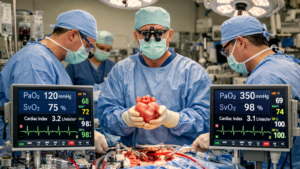
Optimal myocardial protection remains a cornerstone of successful heart transplantation (HTx). Despite decades of clinical experience, there is still no universally accepted standard preservation solution for donor heart protection. In this comprehensive 20-year single-center observational study published in Interdisciplinary CardioVascular and Thoracic Surgery, Settepani and colleagues compared long-term outcomes associated with three widely used cardioplegic preservation solutions: Celsior, HTK-Custodiol, and St Thomas .
The study analyzed 528 adult patients who underwent isolated orthotopic heart transplantation between 2002 and 2022 at Niguarda Hospital in Milan. Ten cases involving the Organ Care System were excluded to reduce confounding variables. Patients were stratified according to the preservation solution used in donor heart procurement: Celsior (n=301, reference group), HTK-Custodiol (n=88), and St Thomas (n=139). The mean follow-up period was 6.2 ± 5.5 years, with a maximum of 20 years and 98% completeness of follow-up.
Primary Graft Dysfunction: A Key Early Outcome
The most striking finding was the significantly higher rate of severe primary graft dysfunction (PGD) in the HTK-Custodiol group. Severe PGD occurred in 10.2% of patients receiving HTK-Custodiol-preserved hearts, compared to 4.5% in the Celsior group (P = .040). In contrast, the St Thomas group demonstrated a comparable PGD rate of 3.6% (P = .696 vs reference).
As detailed in Table 3 on page 5, patients in the HTK-Custodiol group also required more postoperative mechanical circulatory support, including extracorporeal membrane oxygenation (ECMO) (10.2% vs 4.5%, P = .046) and intra-aortic balloon pump (IABP) use (29.5% vs 13.4%, P = .001). These findings suggest a clinically meaningful increase in early graft instability when HTK-Custodiol is used.
The discussion section (page 6) highlights possible mechanistic explanations. HTK-Custodiol is an intracellular crystalloid cardioplegia that induces diastolic arrest through sodium depletion and hyperpolarization. Although it permits longer ischemic intervals with single-dose administration (up to 3 hours), experimental data cited by the authors suggest it may be associated with reduced myocardial contractility, oxidative stress, and inflammatory activation. Histologic patterns of PGD—including myocyte edema and contraction band necrosis—may reflect this vulnerability.
In-Hospital Mortality and Long-Term Survival
Despite higher PGD rates in the HTK-Custodiol group, in-hospital mortality did not differ significantly among groups. Overall mortality was 12.9%, with 13.6% in HTK-Custodiol and 12.9% in St Thomas—both statistically comparable to Celsior (page 4).
Kaplan-Meier survival curves on pages 5 and 6 show no significant differences in long-term survival. One-, five-, and twelve-year survival rates were similar across groups:
- Celsior vs HTK-Custodiol:
- 1-year: 82.6% vs 85.2%
- 5-year: 79.4% vs 82.1%
- 12-year: 66.8% vs 62.9%
(P = .706)
- Celsior vs St Thomas:
- 1-year: 82.6% vs 81.5%
- 5-year: 79.4% vs 71.9%
- 12-year: 66.8% vs 65.5%
(P = .640)
Cox proportional hazards modeling (Table 5, page 7) confirmed that cardioplegic solution was not an independent predictor of late mortality. Instead, independent risk factors included increasing recipient age, donor age, chronic renal failure, total ischemic time, and severe PGD.
Notably, severe PGD carried a hazard ratio of 3.253 (P < .001) for late mortality, underscoring the long-term implications of early graft dysfunction—even if short-term mortality remains unaffected.
Rejection Rates and Immunologic Outcomes
Post-transplant rejection rates were comparable among the three groups (page 6, Table 4). Overall rejection occurred in 51.5% of patients, predominantly cellular rejection (49.7%), with no statistically significant intergroup differences. This suggests that preservation solution does not significantly influence immunologic rejection patterns.
Comparative Mechanisms of the Three Solutions
The discussion section (page 6) provides a valuable physiological comparison:
- Celsior: An extracellular high-sodium, low-potassium solution containing glutamate and glutathione, designed to reduce oxidative stress.
- HTK-Custodiol: An intracellular, low-sodium solution enabling prolonged cardioplegic arrest without repeated dosing.
- St Thomas No. 2: An extracellular crystalloid cardioplegia inducing rapid arrest via high potassium and magnesium concentrations.
While HTK-Custodiol offers the practical advantage of single-dose administration during prolonged ischemia, this convenience may come at the cost of increased susceptibility to PGD.
Study Strengths and Limitations
Strengths of the study include its long 20-year timeframe, high follow-up completeness (98%), and consistent surgical and immunosuppressive protocols throughout the study period. The graphical survival curves (pages 5 and 6) clearly illustrate comparable long-term outcomes.
However, the authors acknowledge key limitations:
- Retrospective single-center design
- Unequal group sizes (Celsior larger with longer follow-up)
- Non-randomized solution selection based on surgeon preference
- No adjustment for multiple comparisons
These factors may introduce selection bias or residual confounding.