
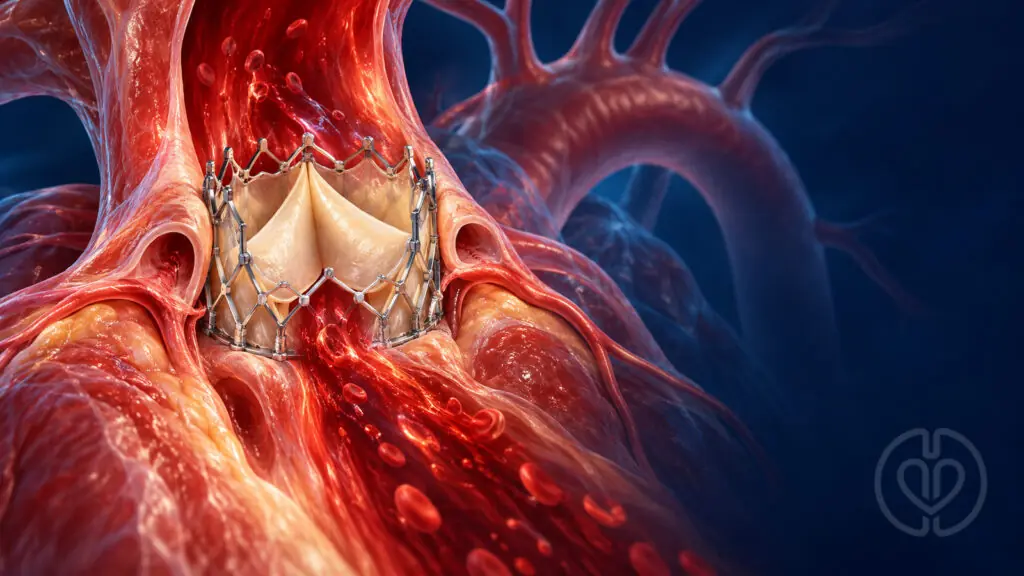
TAVI outcomes in Japan and France were favorable despite substantial differences in anatomy, clinical risk, and valve selection in the TOTO-TAVI registry. Among 6,193 analyzed patients at two experienced centers, the investigators found no statistically significant difference in in-hospital death or three-year all-cause mortality. The findings are reassuring, but this observational comparison does not establish equivalence between countries, devices, or treatment pathways.
Study Design and Population
Iwata and colleagues compared patients treated at Keio University Hospital in Tokyo and Clinique Pasteur in Toulouse between May 2016 and October 2024. Of 6,967 consecutive TAVI procedures, 1,422 Japanese and 4,771 French patients met the analysis criteria. Valve-in-valve procedures, repeat transcatheter valve implantation within a prior transcatheter valve, selected device platforms unavailable in Japan, and cases with inadequate data were excluded.
The registry prospectively captured clinical and procedural information. This report analyzes nonrandomized experience at one center per country; it is not a comparison of nationally representative populations. In-hospital death was the primary endpoint, with procedural complications, discharge valve hemodynamics, and three-year mortality also evaluated.
Different Anatomy and Baseline Risk
Japanese patients were older on average, had smaller body size, and had a higher median STS predicted mortality score: 5.0% versus 3.6%. Chronic kidney disease and dialysis were more common in Japan, while several vascular and pulmonary comorbidities were more common in France.
Mean aortic annulus area was 399 versus 458 mm², and an annulus area of 430 mm² or less was present in 69.3% versus 40.1%. Smaller femoral arteries accompanied the smaller aortic anatomy. These differences matter when interpreting access complications, prosthesis sizing, effective orifice area, and residual pressure gradients.
TAVI Outcomes: Key Findings
| Outcome | Japan | France |
|---|---|---|
| In-hospital death | 0.6% | 1.3% |
| Major bleeding | 1.3% | 3.2% |
| Major vascular complications | 2.4% | 2.4% |
| New pacemaker implantation | 7.9% | 15.3% |
| Conversion to open surgery | 0.1% | 0.1% |
| Median hospital stay | 8 days | 6 days |
| Three-year all-cause mortality | 22.5% | 23.5% |
Cardiovascular death was lower in Japan, whereas minor bleeding was more frequent. Disabling stroke, acute kidney dysfunction, and major vascular complications did not differ significantly. These associations reflect differences in patient selection, devices, local practice, and other measured or unmeasured factors; they cannot establish that one country’s approach caused better outcomes.
Small Annuli, Valve Selection, and Residual Gradients
Device selection differed sharply: the SAPIEN series accounted for 79.0% of procedures in Japan and 33.1% in France, while Evolut use was more common in France. Valve choice was determined by each institutional Heart Team rather than random allocation.
At discharge, mean effective orifice area was smaller in Japan, 1.53 versus 2.30 cm², and mean transvalvular gradient was higher, 11.9 versus 9.4 mmHg. Severe prosthesis-patient mismatch was reported in approximately 5% of Japanese patients versus 0.3% of French patients. The paper contains small differences between its text, table, and figure presentations of mismatch; the overall direction is consistent.
Similar observed mortality over three years does not establish that mismatch has no clinical importance. The cohorts were elderly, follow-up was limited, and valve platform and anatomy were strongly intertwined. Longer-term valve function and outcomes remain relevant questions, particularly for younger patients.
How to Interpret the Mortality Comparison
The reported three-year hazard ratio was 0.678 with a very wide 95% confidence interval of 0.114–4.033. This imprecision allows substantial uncertainty in either direction. Missing survival information was handled using multiple imputation, and the authors acknowledge that selection bias and the imputation approach may affect the findings.
The central illustration gives a different P value for the three-year comparison than the abstract and Results text. This summary uses the latter reporting and avoids interpreting the study as an equivalence or noninferiority analysis. Failure to detect a difference is not proof that the true risks are identical.
Relevance for Perfusion and Heart Teams
For perfusionists and cardiovascular teams, the report illustrates how vascular access, annular dimensions, prosthesis selection, bleeding, and conduction complications intersect in structural heart procedures. Although conversion to open surgery was uncommon, it occurred in both cohorts. The study does not evaluate a perfusion standby protocol, cardiopulmonary bypass strategy, or extracorporeal rescue intervention.
The lower pacemaker rate in Japan cannot be attributed solely to one valve platform. Baseline conduction findings, implant technique, observation periods, and local implantation thresholds may also influence this outcome. These data support multidisciplinary review rather than a universal device-selection rule. Additional educational resources are available through the IPA Member Hub.
Limitations
This was an unblinded observational comparison across two institutions, with substantial baseline and device differences. Attempts at propensity matching left too few suitable matches for an adequate analysis. No independent echocardiographic core laboratory adjudicated valve measurements. Paravalvular leak was deliberately not compared because recording differed substantially between sites.
The enrollment period spanned several device generations, and medium-term survival data were incomplete. Country-specific predictor models do not establish that a risk factor operates differently between populations without a direct interaction analysis. The absence of significant predictors in the smaller Japanese cohort may reflect limited events and statistical power.
The authors disclose device-industry proctoring relationships involving Edwards Lifesciences, Abbott, Medtronic, and Boston Scientific; the original paper details the individual disclosures. This independently written summary is for professional education and does not provide patient-specific treatment advice.
Original Article
Iwata J, Hayashida K, Arow Z, et al. Differences between Japan and France in transcatheter aortic valve implantation: insights from the TOTO-TAVI study. AsiaIntervention. 2026;12:181–190. doi:10.4244/AIJ-D-26-00018.
The source PDF is unchanged. The cover is an AI-generated editorial illustration and is not a technical implantation guide.