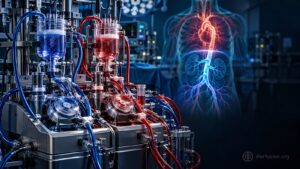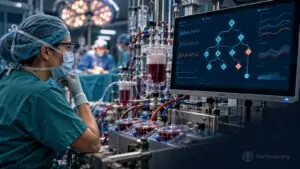

Lung transplantation remains the definitive treatment for patients with end-stage lung disease, yet donor shortages continue to limit access and contribute to high waiting list mortality worldwide. Donation after circulatory death (DCD) has emerged as an important strategy to expand the donor pool, potentially increasing lung transplant activity by nearly one-third. However, concerns regarding warm ischemia, donor instability, and graft quality have historically constrained the widespread adoption of DCD lungs. Ex vivo lung perfusion (EVLP), a normothermic preservation and assessment technique, was developed to address these challenges by allowing clinicians to evaluate and potentially recondition donor lungs prior to transplantation.
In this systematic review and meta-analysis, Costa and colleagues sought to clarify whether the use of EVLP in DCD lung transplantation translates into measurable improvements in early graft function and short-term clinical outcomes compared with direct transplantation without EVLP. While EVLP has been widely adopted in many centers, particularly for marginal or borderline grafts, its true benefit in the DCD setting remains debated. Importantly, this study represents the first pooled quantitative analysis specifically focused on EVLP use in DCD lung transplantation.
The authors conducted a comprehensive search of MEDLINE, EMBASE, and the Cochrane Library through July 2025, adhering to PRISMA guidelines and registering their protocol with PROSPERO. Five observational studies met inclusion criteria, encompassing 654 adult lung transplant recipients. Of these, 304 patients received DCD lungs that underwent EVLP prior to implantation, while the remaining patients underwent direct transplantation without EVLP. No randomized controlled trials were identified, reflecting the practical and ethical challenges of randomization in this clinical context.
The primary outcome of interest was the incidence of grade 3 primary graft dysfunction (PGD), a severe form of early allograft injury associated with increased morbidity and mortality. Secondary outcomes included intensive care unit (ICU) length of stay, hospital length of stay, short- and mid-term survival, and postoperative complications such as pneumonia and acute rejection. Quantitative analyses were performed using random-effects models, while outcomes reported inconsistently across studies were synthesized qualitatively.
The pooled analysis demonstrated no statistically significant difference in the incidence of grade 3 PGD between EVLP-treated DCD lungs and those transplanted directly. Similarly, ICU and hospital length of stay were comparable between groups, although hospital length of stay showed substantial heterogeneity, likely reflecting differences in recipient severity and institutional practices rather than the effect of EVLP itself. Qualitative assessment of short- and mid-term survival revealed similar outcomes at 90 days and six months, with no consistent survival advantage associated with EVLP use.
Postoperative complications also appeared comparable between groups. Rates of pneumonia and acute rejection varied across individual studies but did not demonstrate a clear or clinically meaningful difference attributable to EVLP. Importantly, although some cohorts reported slightly higher complication rates in EVLP recipients, these patients often represented higher-risk grafts selected for EVLP precisely because of pre-existing concerns regarding donor quality.
The authors emphasize that EVLP functions primarily as a selection and assessment tool rather than a guaranteed means of improving outcomes. In practice, EVLP is frequently applied to lungs perceived as marginal, including those with prolonged agonal times, suboptimal oxygenation, pulmonary edema, or radiographic abnormalities. As such, EVLP-treated grafts may inherently differ from directly transplanted lungs, introducing selection bias that complicates interpretation of comparative outcomes. The slightly higher, though non-significant, incidence of PGD observed in some EVLP cohorts likely reflects these underlying differences rather than harm caused by the EVLP process itself.
Beyond clinical outcomes, the discussion highlights the broader physiological and logistical benefits of EVLP. The technique allows continuous assessment of gas exchange, pulmonary mechanics, and imaging findings, while also enabling targeted interventions during perfusion. Emerging evidence suggests EVLP may modulate inflammatory pathways, reduce cytokine release, and provide a platform for biomarker assessment with potential prognostic value. These features position EVLP not only as an evaluation tool but also as a potential therapeutic window for future innovations.
Despite these advantages, the study underscores that EVLP is resource-intensive, requiring specialized equipment, trained personnel, and additional time. Given the absence of clear superiority in early outcomes, routine EVLP use for all DCD lungs may not be justified. Instead, the findings support a selective EVLP strategy, reserving its use for grafts with uncertain quality while allowing well-preserved DCD lungs to proceed directly to transplantation.
The authors acknowledge several limitations, including the observational nature of all included studies, heterogeneity in EVLP protocols, and limited sample size. Nonetheless, the consistency of findings across multiple centers and alignment with registry data strengthen the conclusions. Overall, this meta-analysis supports the safety of EVLP in DCD lung transplantation while reinforcing that its greatest value lies in careful graft selection rather than routine application.