

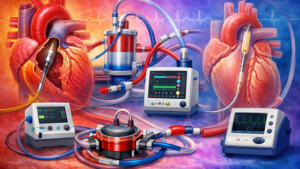
Mechanical Circulatory Support in Cardiogenic Shock

Mechanical Circulatory Support in Cardiogenic Shock: A Contemporary Head-to-Head Comparison

This mini review compares the three main temporary mechanical circulatory support options for cardiogenic shock: Impella, venoarterial extracorporeal life support (VA-ECLS), and intra-aortic balloon pump (IABP). It explains each device’s physiology, indications, risks, and evidence base, then proposes practical algorithms for selection, escalation, de-escalation, and anticoagulation to help clinicians tailor support to shock severity and cause.

Read More »
OCEAN Trial Crossroads: M-TEER in Advanced Heart Failure

Outcomes of Transcatheter Edge-to-Edge Repair in Potentially Favorable Candidates for Left Ventricular Assist Device: Evidence From the OCEAN-Mitral Registry

This study evaluated mitral transcatheter edge-to-edge repair (M-TEER) in advanced heart failure patients who might otherwise have been reasonable candidates for left ventricular assist device (LVAD) therapy. Among 129 such patients from the OCEAN-Mitral Registry, procedural success was high at 96%, but long-term outcomes were less reassuring, especially in those with marked left ventricular enlargement. Larger LV size predicted cardiovascular death after M-TEER.

Read More »
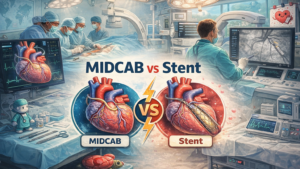
MIDCAB vs Drug-Eluting Stent: Two Paths to LAD Revascularization

Revascularization of Left Anterior Descending Artery with Minimally Invasive Direct Coronary Artery Bypass Graft vs. Drug Eluting Stents: A Retrospective, Two-Center Study

This retrospective two-center study compared long-term outcomes of minimally invasive direct coronary artery bypass (MIDCAB) with drug-eluting stent (DES) percutaneous coronary intervention for left anterior descending (LAD) artery disease. Among matched patient groups, MIDCAB resulted in significantly lower rates of recurrent angina and repeat revascularization within two years. However, long-term survival up to 20 years was similar between both treatments. The findings support MIDCAB as a durable alternative for LAD revascularization.

Read More »