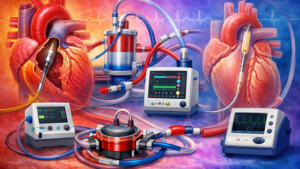
This review examines how anticoagulation management in extracorporeal membrane oxygenation, or ECMO, is evolving beyond traditional unfractionated heparin. ECMO is used to support patients with severe respiratory or cardiac failure, but the circuit itself activates clotting pathways, platelets, complement, and other inflammatory mechanisms. Because of this, anticoagulation is essential. Yet unfractionated heparin, while still the dominant standard, has important limitations. These include bleeding risk, heparin resistance, heparin-induced thrombocytopenia, and unpredictable pharmacokinetics. The article explores how the ECMO field is responding to those limitations by studying alternative drugs, circuit strategies, and more advanced coagulation monitoring approaches.
The paper is a scoping review rather than a meta-analysis, meaning its purpose is to map the breadth of available evidence rather than pool effect sizes or establish definitive comparative superiority. The authors searched peer-reviewed databases and gray literature sources, including PubMed, Cochrane, ClinicalTrials.gov, the WHO trials registry, and conference proceedings. Their goal was to capture both established and emerging approaches to ECMO anticoagulation. They included clinical studies, registered trials, and abstracts focused on anticoagulation strategies other than routine unfractionated heparin optimization. Their final dataset contained 135 records: 78 peer-reviewed clinical studies, 22 clinical trials, and 35 abstracts or proceedings. The literature was highly heterogeneous, covering different age groups, ECMO modes, clinical settings, and outcome definitions.
A central finding is that direct thrombin inhibitors have become the leading alternative to heparin in ECMO practice. Among them, bivalirudin clearly dominates the evidence base. The review identified 49 bivalirudin studies, making it the most extensively studied non-heparin anticoagulant in ECMO. These studies were mostly retrospective and single-center, but they covered adult, pediatric, and even some neonatal populations. Bivalirudin appeared in a wide range of clinical settings, including venovenous ECMO for acute respiratory distress syndrome and COVID-19, venoarterial ECMO for cardiogenic shock, and mixed or hybrid support situations. Outcomes commonly assessed included bleeding, thrombosis, time in therapeutic range, circuit complications, mortality, transfusion needs, and monitoring performance. Overall, bivalirudin emerged as the most clinically integrated and evidence-supported alternative to heparin, even though definitive multicenter randomized evidence remains limited.
Argatroban was the second most prominent direct thrombin inhibitor discussed. Nine argatroban studies were included, most in adult patients and especially in venovenous ECMO. Several of these involved severe ARDS or COVID-associated respiratory failure. Argatroban was consistently compared with heparin and was often evaluated in the context of heparin intolerance or heparin-induced thrombocytopenia. The review suggests that argatroban is a meaningful alternative, but its evidence base is notably smaller than bivalirudin’s. This difference reflects both lower research volume and less widespread adoption. Still, argatroban remains one of the major pharmacologic contenders in ECMO anticoagulation.
Beyond direct thrombin inhibitors, the article highlights several emerging or exploratory pharmacologic agents. Nafamostat mesylate, mainly studied in South Korea, showed potential in perioperative and VA-ECMO settings, but the available studies were small and retrospective. Prostaglandin E1 appeared in a multicenter randomized double-blind pilot trial, suggesting interest in novel adjunctive approaches. The review also identified work involving factor pathway inhibitors, recombinant thrombomodulin, cangrelor, and regional citrate anticoagulation. These therapies are still early in development, and the authors treat them as promising but far from established. Their role in routine ECMO care will depend on larger and more rigorous trials.
The paper also explores anticoagulation-free and heparin-sparing strategies. These were mainly studied in adults, often in highly selected settings such as trauma or bridge-to-lung-transplant cases. Some protocols used heparin-coated circuits combined with little or no systemic anticoagulation, while others attempted heparin-free ECMO entirely. These strategies are appealing because they may reduce bleeding risk in especially vulnerable patients, but the current evidence is narrow and mostly based on small retrospective cohorts. Similarly, biocompatible and circuit-modified technologies, such as phosphorylcholine-coated circuits, remain intriguing but underdeveloped from a clinical evidence standpoint. The review suggests that device-level innovation could play a major future role, though the field is still in an early translational phase.
Another major theme is monitoring innovation. Traditional coagulation tests such as aPTT and ACT remain widely used, but their limitations are well recognized, especially when alternative anticoagulants are involved. The review identifies growing interest in thromboelastography, rotational thromboelastometry, factor-based clotting assays, predictive modeling, and even machine learning. These tools aim to move ECMO anticoagulation from generalized protocols toward individualized, data-driven management. The authors present this as one of the most exciting frontiers in the field, especially because anticoagulation complications often reflect dynamic patient-specific and circuit-specific interactions.
The authors also stress the weaknesses in the evidence base. Most studies were adult-focused, retrospective, and single-center. Neonatal and pediatric patients were underrepresented. Definitions of bleeding and thrombosis varied widely, limiting comparison across studies. The review itself did not perform a formal quality appraisal, which is appropriate for a scoping review but means it cannot determine which strategy is definitively best. Its value lies in showing where the momentum in research is building. The overall message is that ECMO anticoagulation is moving away from a one-drug model toward a more personalized framework that may combine alternative drugs, smarter monitoring, and better circuit technology. The field is clearly advancing, but stronger multicenter randomized trials and standardized outcome definitions are still urgently needed.