
Ranolazine and Cardioprotection During Myocardial Ischemia

Cardioprotective Effects of Ranolazine in Myocardial Infarction Mediated by Stimulation of the Endogenous Mediators Involved in Ischemic Preconditioning

This experimental rat-heart study tested whether ranolazine protects the myocardium through pathways similar to ischemic preconditioning. Using a Langendorff ischemia-reperfusion model, ranolazine reduced infarct size, LDH, CK-MB, troponin I, and improved ventricular function. These benefits were lost when nitric oxide, adenosine, bradykinin, or ATP-sensitive potassium channel pathways were blocked, supporting their role in ranolazine-mediated cardioprotection.

Read More »
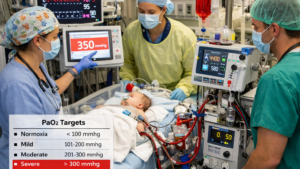
Bright Neonatal ECMO Team Managing Oxygen Targets

Impact of Early Hyperoxia on Outcomes During Neonatal and Pediatric Veno-Arterial Extracorporeal Life Support

This single-center retrospective cohort study examined 229 neonatal and pediatric VA-ECLS patients and found that early hyperoxia was common, affecting 79% of cases. Severe hyperoxia, defined as PaO2 above 300 mmHg, was linked to more cardiovascular or renal complications, but it was not independently associated with in-hospital mortality, acute kidney injury, or worse functional outcomes after adjustment. The authors support standardized oxygen targets during VA-ECLS.

Read More »
OCEAN Trial Crossroads: M-TEER in Advanced Heart Failure

Outcomes of Transcatheter Edge-to-Edge Repair in Potentially Favorable Candidates for Left Ventricular Assist Device: Evidence From the OCEAN-Mitral Registry

This study evaluated mitral transcatheter edge-to-edge repair (M-TEER) in advanced heart failure patients who might otherwise have been reasonable candidates for left ventricular assist device (LVAD) therapy. Among 129 such patients from the OCEAN-Mitral Registry, procedural success was high at 96%, but long-term outcomes were less reassuring, especially in those with marked left ventricular enlargement. Larger LV size predicted cardiovascular death after M-TEER.

Read More »
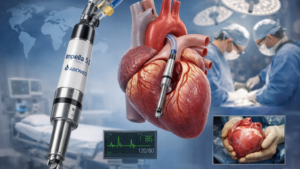
Global Bridge to Heart Transplant With Prolonged Impella 5.5 Support

Impact of Prolonged Impella 5.5 Support on Post-Transplant Outcomes: An Institutional Study

This institutional retrospective study evaluated 72 patients bridged to heart transplant with the Impella 5.5 and compared outcomes for support durations of 14 days or less versus more than 14 days. Prolonged support did not worsen 1-year survival, graft rejection, length of stay, or major complications. Although rehospitalization within a year was common, overall survival was excellent, supporting extended Impella 5.5 use as a safe bridge-to-transplant strategy.

Read More »