
Comparing Myocardial Protection Strategies in Heart Transplantation

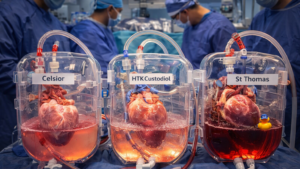
Long-Term Outcome of Myocardial Protection in Heart Transplantation: Comparison Among 3 Different Solutions 

This 20-year single-center study of 528 heart transplant recipients compared three preservation solutions: Celsior, HTK-Custodiol, and St Thomas. HTK-Custodiol was associated with a significantly higher rate of severe primary graft dysfunction (10.2% vs 4.5%), but long-term survival and rejection rates were similar across groups. Severe PGD, ischemic time, and donor/recipient age predicted late mortality. Authors advise caution with HTK-Custodiol.


Read More »
Expanding the Donor Pool: Rethinking Time to Death in DCD Liver Transplantation

Donor Time to Death and DCD Liver Transplant Outcomes: Challenging the Dogma That Shorter Is Better

This large UNOS registry study of 8,489 DCD liver transplants (2010–2024) found that shorter donor time to death (TTD) was associated with worse graft survival, while prolonged TTD did not negatively impact outcomes—even without normothermic regional perfusion (NRP). Despite this, liver utilization declined sharply after 15 minutes of TTD. Simulation modeling showed that avoiding TTD-based decline could increase utilization by 17%, potentially adding hundreds of safe transplants.

Read More »
Elective ECMO Lung Transplant

Elective Use of Intraoperative Extracorporeal Membrane Oxygenation in Patients With Pulmonary Fibrosis Reduces Primary Graft Dysfunction After Bilateral Lung Transplantation

This single-center retrospective study evaluated 422 pulmonary fibrosis patients undergoing bilateral lung transplantation between 2012 and 2025. After adopting a more liberal elective intraoperative veno-arterial ECMO strategy in 2020, the incidence of severe primary graft dysfunction (PGD grade 3 at 72 hours) significantly decreased. Elective ECMO use was associated with shorter ventilation times, reduced dialysis rates, and a trend toward improved one-year graft survival without increasing major vascular complications.

Read More »